Why Technology Projects in Commercial Buildings Fall Behind Schedule
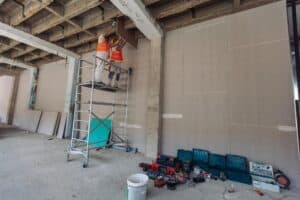
In commercial construction and renovation projects, delays are often associated with labor shortages, permitting issues, material lead times, or changes in scope.
But coordination challenges involving building technology have also become increasingly common — and they are often underestimated until they begin affecting the broader project timeline.
From AV systems and structured cabling to access control, networking, and system integration, building technology now touches nearly every part of a commercial environment. As these systems become more interconnected, the coordination required to implement them successfully becomes significantly more complex.
When technology planning is treated as a late-stage consideration instead of a core part of the project, delays become much more difficult to avoid.
Technology Is No Longer a Standalone Scope
Years ago, building technology could often be installed independently near the end of a project. Today, that is rarely the case.
Modern systems depend on coordination with:
- electrical infrastructure
- ceiling layouts
- millwork and furniture
- architectural finishes
- security requirements
- HVAC and mechanical systems
- network infrastructure
Because these systems overlap with so many trades and disciplines, even small misalignments can create downstream scheduling issues.
A conference room display may require backing that was never coordinated. An access control system may depend on door hardware decisions that changed midway through the project. Cabling pathways may become inaccessible once ceilings are closed or drywall phases move forward.
In many cases, delays occur not because installation itself is difficult, but because infrastructure access disappears once other phases of construction progress.
None of these issues are necessarily catastrophic on their own — but collectively, they can create significant delays.
Delays Often Begin During Planning
One of the most common causes of technology-related delays is incomplete coordination during the design phase.
In many projects, technology discussions begin after major architectural and construction decisions have already been made. At that point, teams are forced to adapt systems around existing conditions rather than designing infrastructure intentionally from the beginning.
This reactive approach creates friction throughout implementation.
Instead of moving through installation efficiently, teams spend time resolving conflicts, adjusting layouts, or revisiting decisions that should have been addressed earlier in the process.
Procurement timelines can also become a factor very quickly. Many technology systems rely on specialized hardware with extended lead times, particularly in AV, networking, and security environments. When selections or approvals happen late, scheduling pressure increases across the entire project team.
The result is not just timeline disruption — it’s increased complexity throughout the project lifecycle.
Communication Gaps Create Operational Problems
Technology projects involve multiple stakeholders with different priorities and responsibilities.
IT teams focus on network performance, security, and integration. Facilities teams prioritize operational continuity and maintainability. Architects are balancing aesthetics and space planning, while contractors are managing sequencing, trades, and deadlines.
Without strong communication between these groups, assumptions begin to replace coordination.
Small misunderstandings can quickly become larger operational issues:
- infrastructure installed in the wrong location
- pathway requirements missed during coordination
- systems that conflict with furniture layouts or ceiling plans
- incompatible hardware selections between vendors
By the time these issues surface in the field, project timelines are already affected.
Late Changes Create Compounding Delays
Technology infrastructure is especially vulnerable to late-stage project changes because so many systems are interconnected.
As spaces evolve during construction, technology systems often need to evolve alongside them. But unlike some finishes or furnishings, infrastructure changes are rarely isolated once installation begins.
Moving a display may impact:
- power locations
- conduit pathways
- backing requirements
- furniture layouts
- camera positioning
- ceiling coordination
Adjusting room layouts may require AV redesigns, cabling revisions, or changes to network infrastructure.
These modifications introduce:
- additional labor
- procurement adjustments
- coordination across multiple trades
- schedule compression near project completion
The later these decisions occur, the greater their impact on both schedule and cost.
The Most Successful Projects Prioritize Coordination Early
Technology projects run most smoothly when infrastructure planning begins early and remains integrated throughout the lifecycle of the project.
This includes involving technology partners during design, coordinating infrastructure alongside architectural and MEP systems, and identifying dependencies before installation begins.
Early coordination gives teams the ability to:
- resolve conflicts before construction progresses
- plan pathways and equipment spaces intentionally
- align technology requirements with building operations
- reduce field-level surprises later in the project
When communication and coordination are prioritized upfront, teams spend less time reacting to problems and more time executing efficiently.
Technology Success Depends on More Than Installation
Successful technology implementation is not simply about installing hardware correctly. It depends on how well people, systems, infrastructure, and timelines are aligned throughout the project.
At i.e. Smart Systems, we work closely with architects, contractors, IT teams, and facilities leaders to help technology projects move forward with clarity and coordination — reducing delays and creating systems that perform reliably long after construction is complete.
Because in today’s commercial environments, technology is no longer a finishing touch. It’s a critical part of how the building functions from day one.