The Modern Conference Room Problem
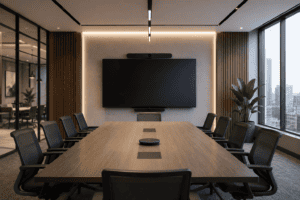
Conference rooms were once relatively simple spaces. A display, a speakerphone, and a table were often enough to support how teams met and collaborated.
Today, those expectations have changed dramatically.
Modern conference rooms are expected to support hybrid meetings, wireless collaboration, video conferencing, room scheduling, content sharing, occupancy management, and seamless connectivity across multiple devices and platforms — often simultaneously.
And despite the amount of technology now built into these spaces, conference rooms remain one of the most common sources of frustration in the modern workplace.
Meetings start late. Audio cuts out. Displays fail to connect. Users struggle with unfamiliar interfaces. IT teams receive constant support requests for rooms that should function reliably every day.
The issue is rarely a single piece of hardware. More often, the problem is that conference rooms have evolved faster than the infrastructure and planning behind them.
Expectations Have Changed Faster Than Room Design
The role of the conference room has shifted significantly over the last several years.
Meetings are no longer designed only for the people physically sitting in the room. In many cases, remote participants are just as important — sometimes even the majority of attendees.
This changes everything about how a room needs to function.
Audio coverage, camera placement, display visibility, acoustics, network performance, and furniture layouts all play a larger role in determining whether a meeting experience feels seamless or frustrating.
Many conference rooms, however, were never designed for this level of demand. Systems have often been layered onto spaces incrementally over time, creating environments where technology exists — but does not necessarily work together cohesively.
Complexity Creates Friction
One of the biggest challenges in modern conference rooms is the growing complexity behind seemingly simple tasks.
Joining a meeting should not require multiple remotes, switching inputs, troubleshooting cables, or navigating unfamiliar interfaces. Yet these experiences remain common in workplaces of every size.
As more platforms and devices are introduced into collaboration spaces, the user experience often becomes fragmented:
- different rooms operate differently
- interfaces vary across spaces
- connectivity methods change from room to room
- systems require manual adjustments before meetings can begin
Over time, these inconsistencies create operational friction that impacts both productivity and user confidence.
When employees begin avoiding certain rooms because “that room never works,” the issue is no longer technical — it becomes cultural.
The User Experience Is Often Undervalued
Conference room technology is frequently evaluated based on features and specifications. But the long-term success of a room depends far more on usability than capability alone.
A room with fewer features but a seamless experience will almost always outperform a room filled with advanced technology that users struggle to operate.
The best conference rooms feel intuitive. Meetings begin quickly. Audio is clear. Remote participants feel included. Users focus on collaboration instead of troubleshooting the environment around them.
Achieving that level of simplicity is often much more difficult than adding additional technology.
Infrastructure Still Matters
Many conference room problems begin behind the walls rather than on the table.
Poorly planned network infrastructure, insufficient power coordination, inadequate acoustics, limited pathway planning, or inconsistent standards across rooms can all contribute to unreliable performance.
In some environments, the visible technology receives the majority of attention while the underlying infrastructure is treated as secondary. But conference room performance is heavily dependent on what users never see:
- network reliability
- structured cabling
- wireless performance
- audio processing
- integration between systems
Without a strong infrastructure foundation, even high-end systems can deliver inconsistent experiences.
Standardization Improves Reliability
As organizations expand, conference room inconsistency becomes increasingly difficult to manage.
When every room has different hardware, layouts, or workflows, support becomes more reactive and troubleshooting becomes more time-consuming.
Standardization helps reduce this complexity by creating predictable user experiences across environments. Employees can move between rooms without relearning systems, and IT teams can support spaces more efficiently.
This does not mean every room needs to be identical. It means creating consistent operational logic behind how rooms are designed and managed.
Simplicity Requires Intentional Design
One of the biggest misconceptions in workplace technology is that more equipment automatically creates a better meeting experience.
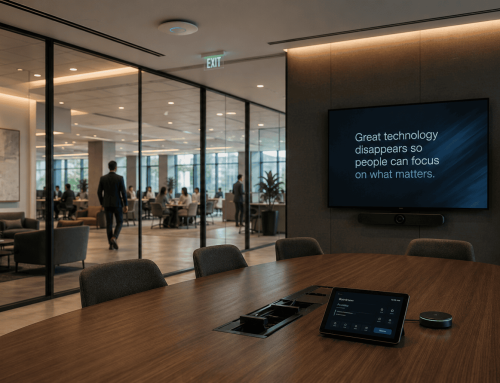
In reality, the most successful conference rooms are usually the ones where technology feels almost invisible.
That level of simplicity does not happen accidentally. It requires thoughtful planning around:
- room usage
- acoustics
- lighting
- infrastructure
- user workflows
- platform compatibility
- long-term operational support
When these elements are aligned, conference rooms stop becoming support tickets and start functioning as reliable collaboration environments.
Solving the Modern Conference Room Problem
Conference rooms have become one of the most important — and most challenging — technology environments within the modern workplace.
At i.e. Smart Systems, we work with organizations to design collaboration spaces that prioritize reliability, usability, and long-term performance — helping teams create meeting environments that support the way people actually work today.
Because the best conference room technology is not the technology people notice most. It’s the technology that allows meetings to happen without interruption at all.