The Hidden Technology Costs of Office Expansions and Relocations
Growth is exciting.
Whether an organization is opening a new location, expanding into additional space, relocating headquarters, or renovating an existing office, the focus is often on what the new environment will enable: more employees, improved collaboration, better amenities, and greater operational flexibility.
But while organizations carefully budget for construction, furniture, and moving expenses, one area is frequently underestimated:
technology infrastructure.
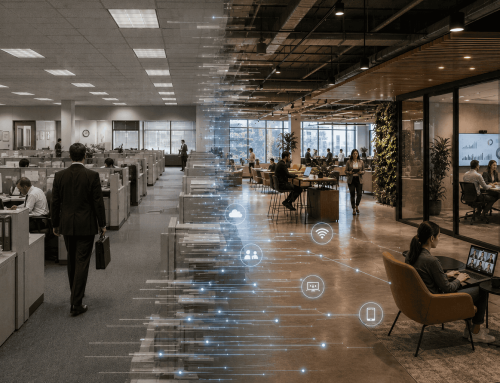
The reality is that workplace technology is deeply interconnected with how a space functions. Decisions involving networks, AV systems, security, access control, structured cabling, and connectivity often influence project timelines and budgets far more than organizations initially anticipate.
The challenge isn’t necessarily the technology itself. It’s the complexity of implementing technology within a changing environment.
Technology Moves With the Business
When organizations expand or relocate, technology rarely remains static.
Employees need connectivity from day one. Meeting spaces need to support collaboration. Security systems must remain operational. Access credentials need to be updated. Networks need to accommodate new users, devices, and workflows.
Every business function depends on technology in some capacity.
As a result, technology planning becomes more than an IT exercise. It becomes a critical part of the overall relocation strategy.
Organizations that wait too long to evaluate infrastructure requirements often discover that technology decisions impact everything from occupancy schedules to construction timelines.
Existing Infrastructure Doesn’t Always Translate
One of the most common misconceptions during office relocations is the assumption that existing technology can simply be moved into a new environment.
In reality, every space presents unique challenges.
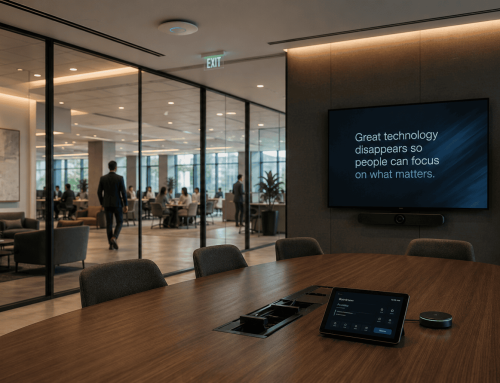
A conference room that worked perfectly in one office may require a completely different design in another. Wireless coverage, network requirements, room dimensions, acoustics, and building infrastructure all influence system performance.
Similarly, structured cabling pathways, equipment locations, and security requirements often need to be redesigned rather than replicated.
What worked in the previous environment may not align with the realities of the new one.
Growth Often Reveals Infrastructure Limitations
Expansions create another challenge: scale.
As organizations add employees, departments, or locations, technology systems are expected to support more users without sacrificing performance.
This is often where infrastructure limitations become visible.
Networks originally designed for smaller teams may struggle to accommodate growth. Meeting spaces may become oversubscribed. Security systems may require additional capacity. Documentation and standards may become more difficult to manage across locations.
These challenges are rarely caused by poor decisions. More often, they reflect how quickly business needs evolve.
The organizations that scale most effectively are those that evaluate infrastructure alongside growth plans—not after growth has already occurred.
The Cost of Reactive Decisions
When technology planning is delayed, organizations frequently encounter avoidable costs.
Late-stage infrastructure changes often require additional coordination, compressed timelines, and modifications that could have been addressed earlier in the project lifecycle.
Common examples include:
- insufficient network capacity
- inadequate cabling pathways
- under-sized equipment spaces
- access control redesigns
- conference room technology upgrades
- unexpected integration requirements
Individually, these issues may seem manageable. Collectively, they can create budget pressure and project delays that affect the broader relocation effort.
Early planning helps reduce these surprises.
Relocations Are Opportunities to Improve
While office moves can introduce complexity, they also create opportunities.
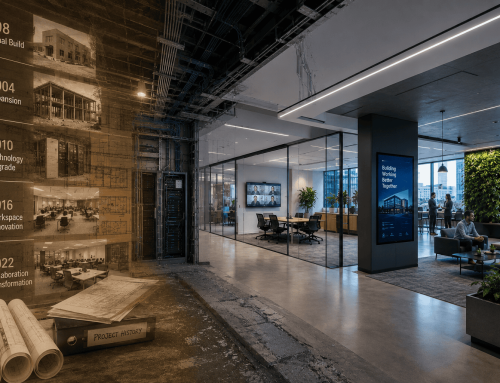
Relocations and expansions provide organizations with a chance to reassess workplace technology, standardize systems, improve user experiences, and build infrastructure that better supports future growth.
Rather than simply recreating the previous environment, many organizations use these transitions to modernize collaboration spaces, strengthen security, improve network performance, and create more consistent experiences for employees across locations.
Viewed strategically, relocation projects become more than physical moves. They become opportunities to improve how the business operates.
Planning for What Comes Next
The most successful office expansions and relocations begin with a simple recognition:
Technology is not a finishing touch.
It is part of the foundation that enables people to work, collaborate, communicate, and operate effectively from the moment they enter a space.
At i.e. Smart Systems, we help organizations plan, design, and implement technology infrastructure that supports growth while minimizing disruption—creating environments that are ready not only for move-in day, but for what comes next.
Because when organizations grow, their technology needs to grow with them.