Why Visitor Experience Is Becoming a Technology Conversation
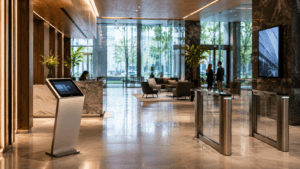
For years, workplace technology conversations focused primarily on employees.
Organizations invested in conference rooms, collaboration platforms, workplace connectivity, and security systems designed to improve internal operations. The goal was simple: create environments that helped employees work more effectively.
Today, that conversation is expanding.
Increasingly, organizations are recognizing that workplace technology also plays a significant role in shaping how visitors experience a building—from clients and business partners to prospective employees and vendors.
The result is a growing focus on visitor experience, and technology is becoming one of the primary drivers behind it.
First Impressions Begin Before the Meeting
When visitors arrive at an office, they begin forming opinions immediately.
Long before they enter a conference room or sit down for a presentation, they are evaluating the experience of entering and navigating the building.
Can they find the correct entrance?
Is check-in intuitive?
Are security procedures efficient?
Can they easily locate their destination?
Small interactions often create a larger impression than organizations realize.
A visitor who spends ten minutes trying to locate a meeting room may remember that experience more than the presentation itself.
Likewise, a seamless arrival experience can reinforce perceptions of professionalism, organization, and attention to detail.
Technology Has Become Part of Hospitality
Many organizations now view workplace technology as an extension of customer experience.
The same way a website, mobile application, or customer portal influences brand perception, workplace technology increasingly shapes how people experience a physical environment.
Modern visitor experiences often include:
- digital visitor management systems
- mobile credentials
- automated notifications
- self-service check-in kiosks
- digital directories
- intelligent wayfinding
- integrated security workflows
When implemented thoughtfully, these technologies reduce friction while maintaining appropriate levels of security and operational control.
The experience feels less transactional and more welcoming.
Security and Convenience No Longer Need to Compete
Historically, organizations often treated security and visitor experience as competing priorities.
More security frequently meant more friction. More checkpoints. More manual processes. More delays.
Modern workplace technology is changing that equation.
Today’s access control and visitor management platforms allow organizations to strengthen security while creating smoother experiences for legitimate visitors.
Pre-registration workflows, temporary credentials, automated notifications, and integrated access systems can help reduce administrative burden while improving visibility and control.
The result is an environment that feels both secure and efficient.
Visitor Expectations Have Changed
Technology expectations are not limited to employees.
Visitors increasingly expect workplace experiences that mirror the convenience they encounter elsewhere in their daily lives.
People are accustomed to:
- mobile check-ins
- digital navigation
- automated communication
- self-service interactions
When workplace environments fail to provide similar levels of convenience, the contrast becomes noticeable.
Organizations that modernize visitor experiences often discover benefits beyond aesthetics. They reduce operational inefficiencies, improve security processes, and create more positive interactions from the moment someone enters the building.
The Physical Workplace Is Part of the Brand
Every interaction within a workplace contributes to how an organization is perceived.
Conference rooms, collaboration spaces, technology systems, security processes, and visitor workflows all communicate something about the business itself.
When technology feels seamless, the workplace reflects confidence and professionalism.
When processes feel outdated or confusing, the opposite can happen.
This is why many organizations are beginning to evaluate visitor experiences as part of a broader workplace strategy rather than simply a facilities concern.
The workplace is no longer just where business happens. It has become an extension of the brand itself.
Creating Better Experiences From the Front Door Forward
As workplace expectations continue evolving, organizations are paying closer attention to the experiences they create for everyone who enters their buildings.
At i.e. Smart Systems, we help organizations design technology environments that balance security, usability, and operational efficiency—creating workplaces that support employees while delivering positive experiences for visitors from the moment they arrive.
Because increasingly, the workplace experience starts long before the meeting begins.