What Makes a Commercial Building “Smart”?
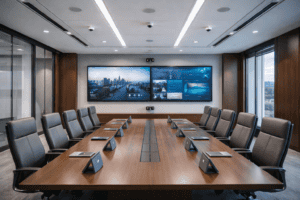
The term “smart building” is used constantly in commercial real estate and construction — but rarely defined clearly. For some, it refers to automation. For others, it means energy efficiency, security, or modern collaboration tools.
In reality, a smart building is not defined by individual technologies. It’s defined by how systems work together to support the people who use and manage the space.
As organizations look toward 2026, here is a practical, experience-driven definition of what makes a commercial building truly smart.
Smart Buildings Start With the Right Infrastructure
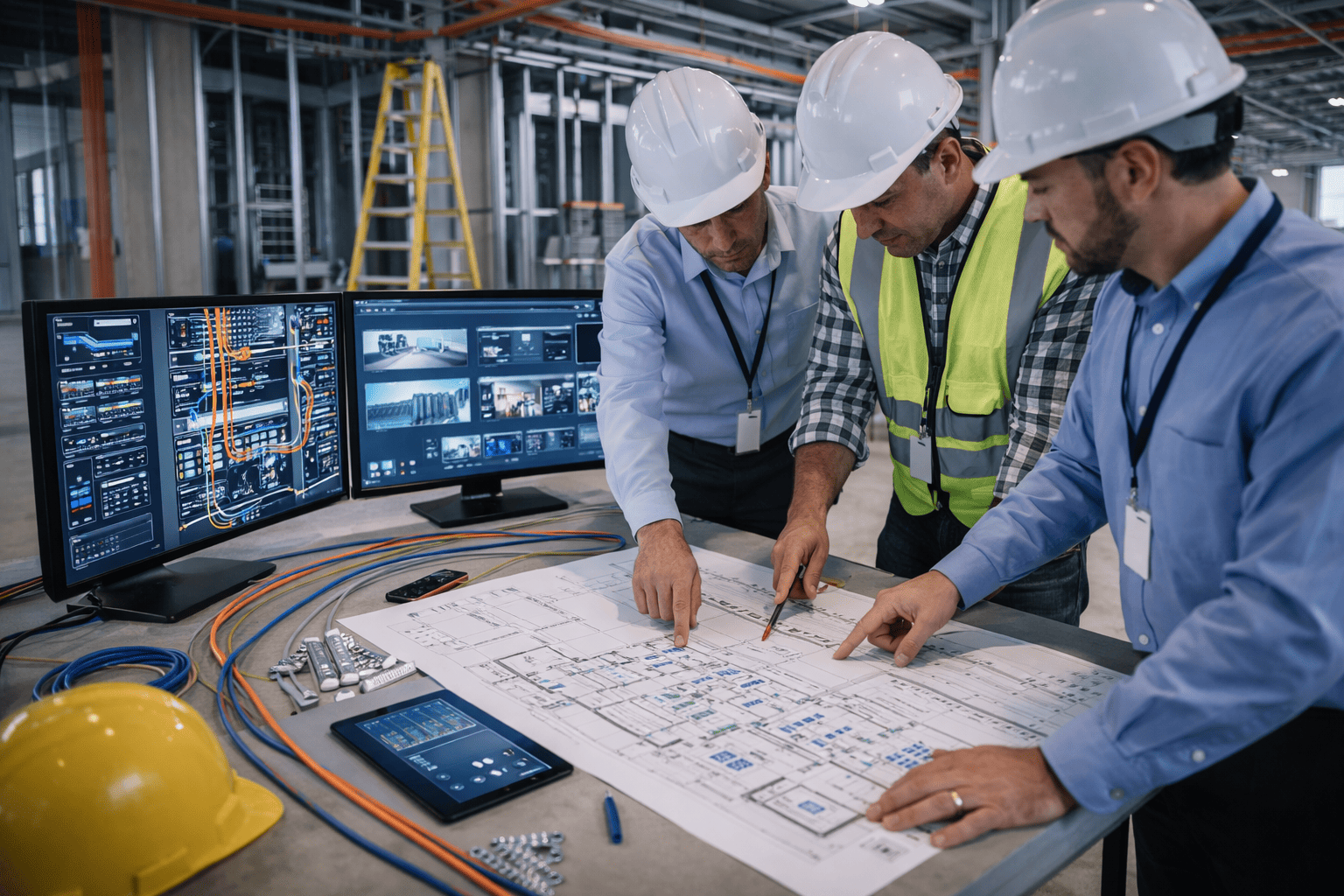
No building becomes smart through software alone. The foundation is a well-designed technology infrastructure that supports current needs and future growth.
This includes:
- Structured cabling and fiber backbone
- Network capacity designed for scale
- Consistent standards across spaces and systems
Without this foundation, even the most advanced technologies struggle to perform reliably. Smart buildings begin with infrastructure that is planned, documented, and built for longevity.
Integration Matters More Than Individual Systems
A common misconception is that adding smart devices automatically creates a smart building. In practice, disconnected systems create more complexity, not less.
A smart building integrates:
- Audio and video systems
- Access control and security
- Network infrastructure
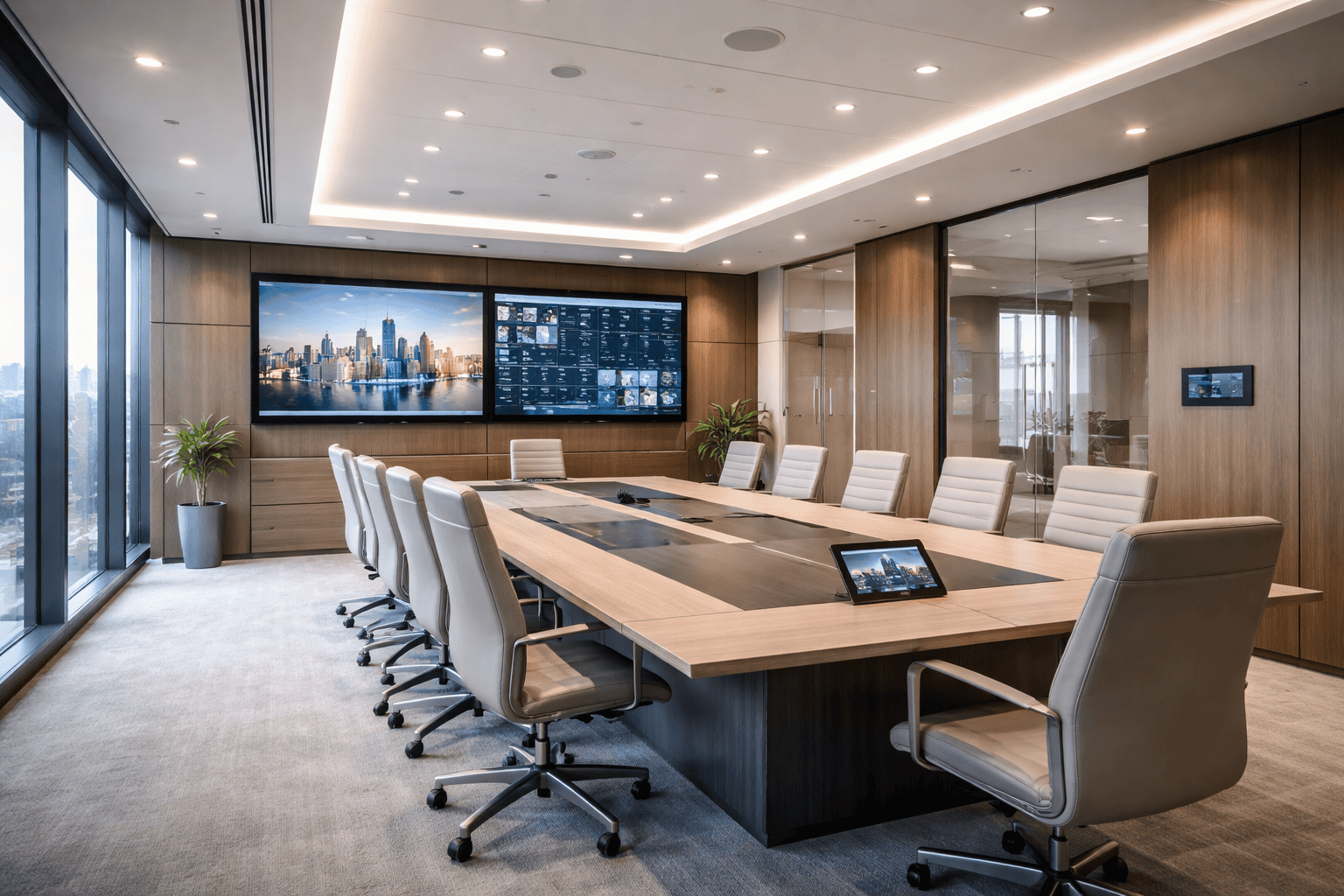
- Room scheduling and collaboration tools
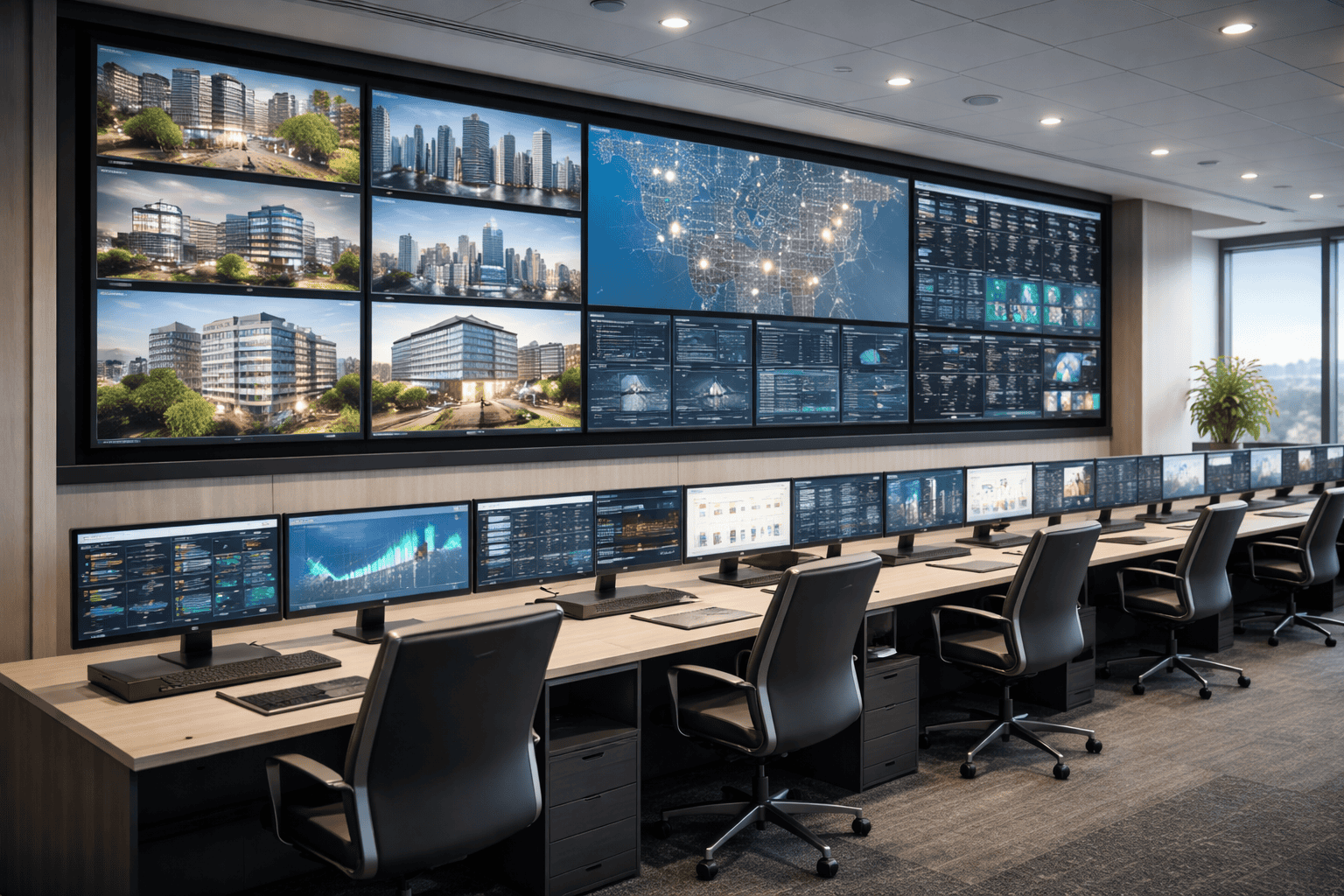
- Monitoring and management platforms
When systems are designed to communicate and operate together, teams gain better visibility and control — and users experience fewer points of friction.
Automation Should Reduce Friction, Not Add Complexity
Automation is only valuable when it simplifies daily operations. In smart commercial buildings, automation supports:
- Faster meeting start times
- Efficient use of shared spaces
- Proactive system monitoring
- Reduced manual intervention for routine tasks
The goal is not to automate everything, but to automate the right things — in ways that feel intuitive to users and manageable for IT and facilities teams.
Visibility and Control Are Essential
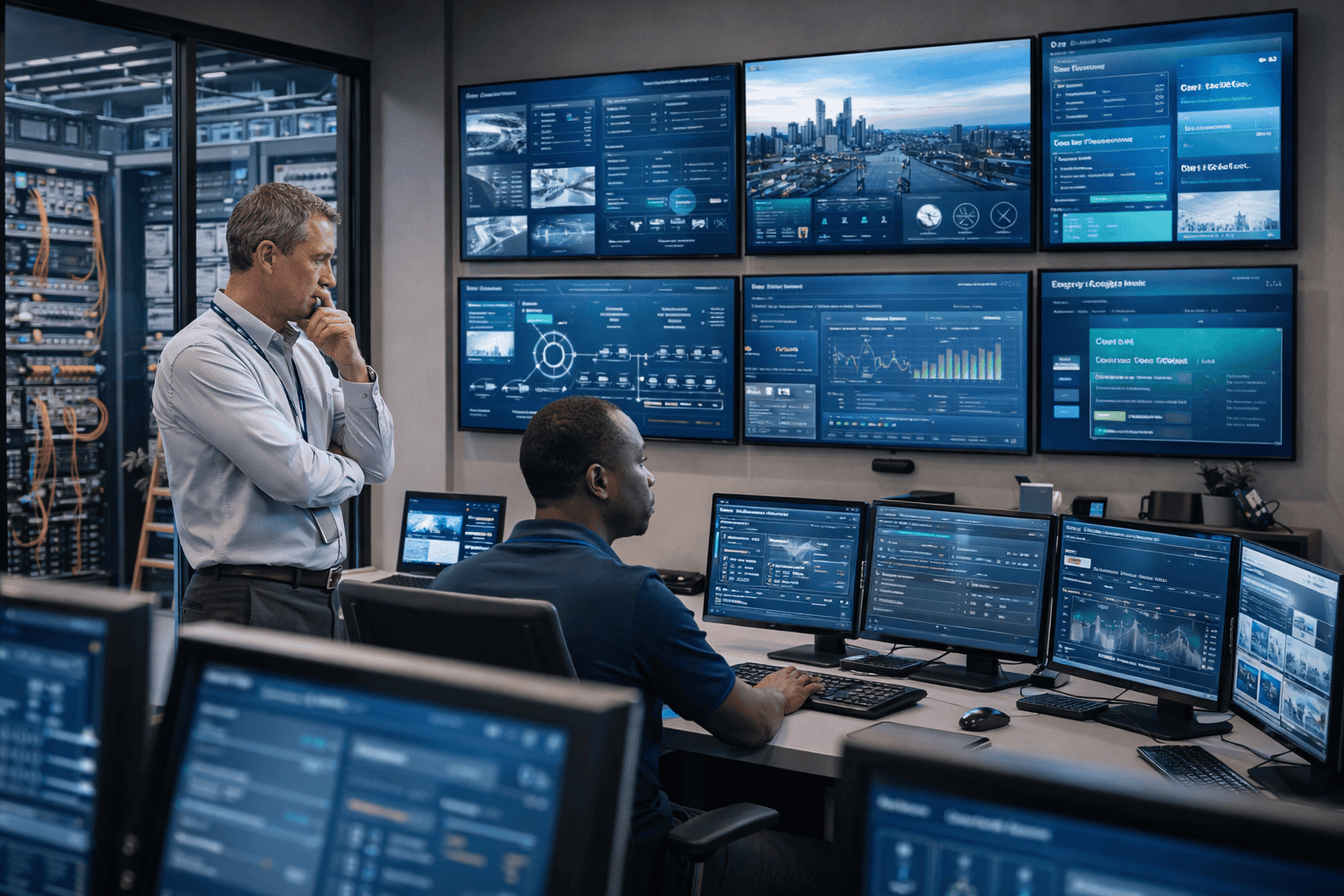
Smart buildings provide real-time insight into how systems are performing and how spaces are being used. This visibility allows teams to:
- Identify issues before they disrupt operations
- Make data-driven decisions about space utilization
- Manage systems remotely when needed
Without visibility, buildings remain reactive. With it, organizations can move toward proactive management.
Flexibility Is a Core Requirement
Commercial spaces rarely stay static. Teams grow, layouts change, and technology evolves.
A smart building is designed to adapt:
- Without major rewiring
- Without repeated downtime
- Without costly retrofits
Flexibility is achieved through thoughtful planning, standardized infrastructure, and scalable system design.
Support Extends Beyond Installation
A building does not become smart on the day systems are installed. Long-term performance depends on ongoing support, monitoring, and maintenance.
Smart buildings are supported by partners who understand the full lifecycle of the technology — from design and installation to long-term operation.
A Practical Definition for 2026
In practical terms, a smart commercial building is one that:
- Is built on reliable, scalable infrastructure
- Integrates systems rather than isolating them
- Uses automation to simplify operations
- Provides visibility for IT and facilities teams
- Adapts as needs change over time
Smart buildings are not about novelty. They are about operational clarity, efficiency, and resilience.
At i.e. Smart Systems, we help organizations design and implement technology that supports these principles — creating buildings that work better today and remain ready for what’s next.